

19 February 2026
.png?length=720&name=printing%20construction%20plans%20(1).png)
In construction, small mistakes can quickly turn into expensive problems. While attention is often focused on materials, labour and logistics, printing errors are frequently overlooked. Yet unclear drawings, incorrect scales or poor-quality reproductions can cause confusion on site, delay progress and lead to costly rework.
With over 50 years of experience supporting the architectural, construction and engineering sectors, Plan Printing 24 understands just how critical accurate, reliable plan printing is. Here’s how to avoid the most common printing mistakes on construction projects and keep your builds running smoothly.
1. Always Check Your Scale Before Printing
One of the most common and costly mistakes is printing plans at the wrong scale. Even slight discrepancies can cause issues when measurements are taken directly from drawings on site.
Before sending files to print, double check that your PDF is set up correctly and includes a visible scale bar. Make sure there are no automatic resizing settings enabled when exporting or printing. At Plan Printing 24, we print plans to scale using high-speed digital equipment, ensuring accuracy across A4, A3, A2, A1 and A0 formats. This removes uncertainty and gives you confidence that every dimension is correct.
If you are unsure, our team is always happy to review files before printing.
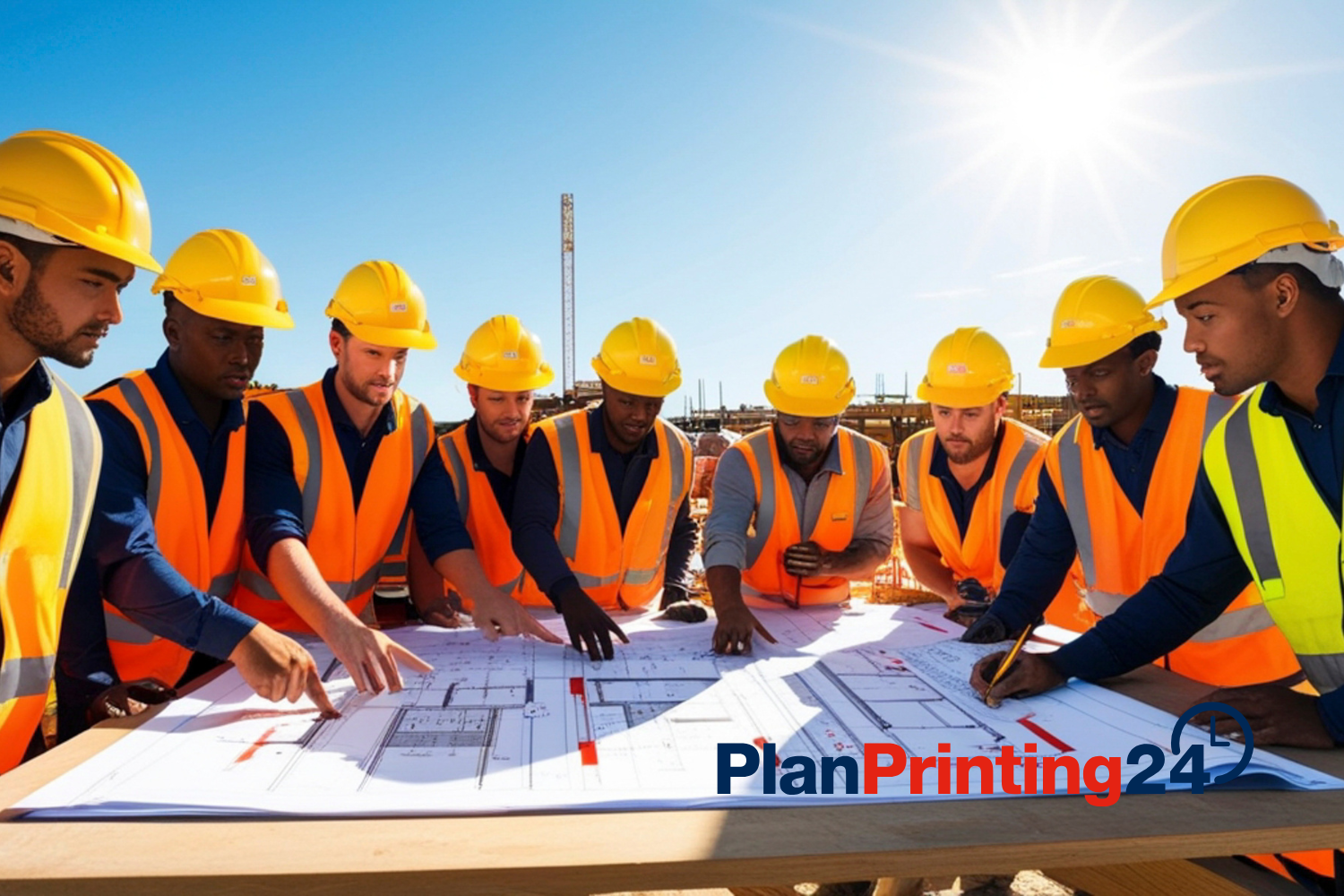
2. Choose the Right Paper Size for Clarity
Trying to squeeze detailed drawings onto a smaller sheet to save space can backfire. Text becomes difficult to read, annotations are cramped and site teams may struggle to interpret key information.
For complex layouts or heavily annotated drawings, A1 or A0 sizes are often the most practical choice. Larger formats improve legibility and reduce the risk of misinterpretation. Our dedicated plan printing service ensures drawings are clear, professional and easy to work from on site.
Clear drawings lead to clearer communication, and clearer communication reduces mistakes.
3. Don’t Compromise on Print Quality
Low-quality prints with faded lines or smudged text can create confusion and errors. On a busy construction site, clarity matters. Fine detail must be sharp and easy to read, even after handling.
Using modern, high-speed digital printing technology, we produce crisp, high-resolution drawings on durable 75gsm paper that is easy to handle and fold. High-quality printing is not a luxury. It is a practical necessity that supports safe and efficient working practices.
The Health and Safety Executive highlights the importance of clear documentation in managing construction risk, as outlined under CDM regulations on their official site at https://www.hse.gov.uk/construction/cdm/2015. Accurate printed drawings play a vital role in that process.
4. Allow for Tight Deadlines Without Rushing
Construction projects often operate to strict timelines. Last-minute design amendments and urgent reprints are common. Rushed printing can increase the likelihood of errors, particularly if your provider cannot handle quick turnarounds reliably.
Plan Printing 24 offers same-day turnaround for orders placed before 3pm, allowing you to meet deadlines without sacrificing quality. Our streamlined online ordering process makes it simple to upload files and receive prints quickly, helping you stay on schedule.
5. Work With a Trusted Printing Partner
Perhaps the most effective way to avoid costly mistakes is to work with a print provider that understands your industry. Construction drawings are not standard marketing prints. They require precision, consistency and attention to detail.
Over five decades, we have built an unrivalled reputation for reliability and customer service. From small independent practices to large contractors and public sector organisations, our clients return to us because they know we understand what is at stake.
When it comes to construction projects, there is no room for error. By checking scale, choosing the right size, prioritising quality and partnering with experienced professionals, you can avoid costly printing mistakes and keep your projects moving forward with confidence.